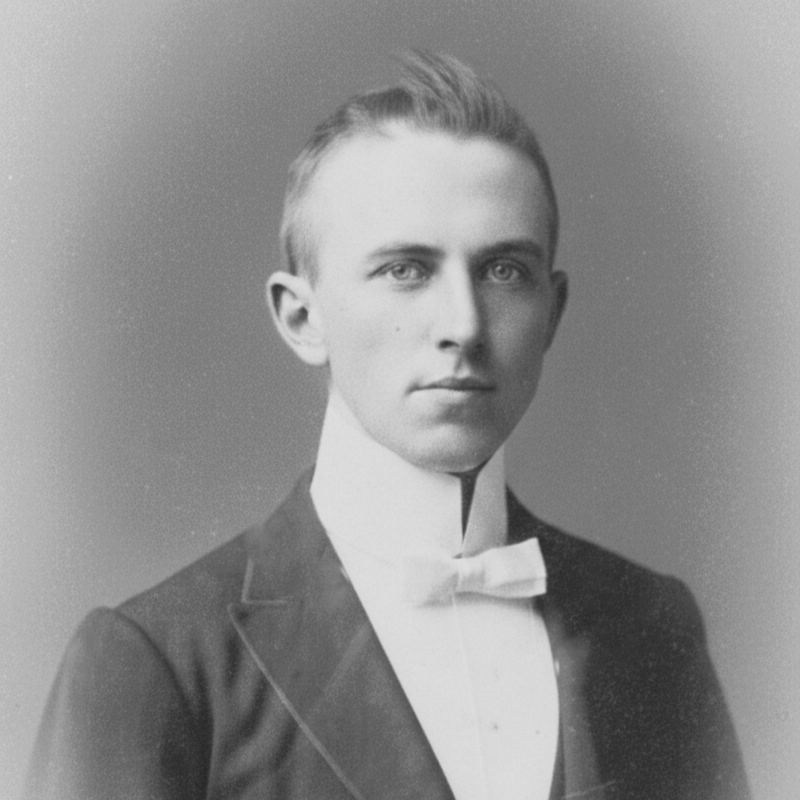
Joseph Verbrigghe was born on 20 February 1880 in Antwerp, in a period of port expansion, colonial trade and urban modernisation. His parents, David Alexander Verbrigghe and Maria Theresia Van Olmen, had been married for only four months. David Alexander was a brigadier in the gendarmerie, a man with local authority in a paramilitary police force organised along military lines. In the family he was known not as David but as Leon. As a gendarme, his father crossed the country with every new posting. Joseph was born in Antwerp, but where he actually grew up is not known.
A new life in Ghent
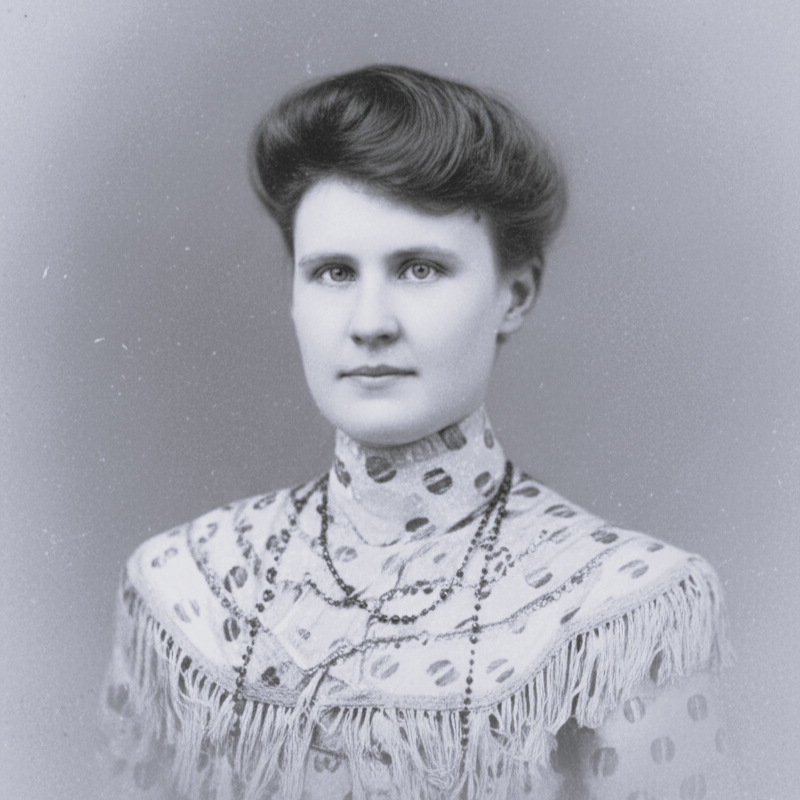
How Joseph eventually ended up in Ghent remains unclear, but it was probably love that brought him to the city. He married Hortensia Berwouts on 24 February 1906, and a few months later, on 17 June, their first son Léon was born.
Joseph initially lived in the centre of Ghent, but after the wedding the couple moved in with Hortensia’s parents at Reigerstraat 15, close to the station. That neighbourhood would become their home ground. Later they lived at Rue de l’Alouette 31 (Leeuwerikstraat) and then at Rue du Pont de Malte 151 (Maaltebruggestraat), a typical working-class district where life played out between work, family and the street.
Seven children, five survivors
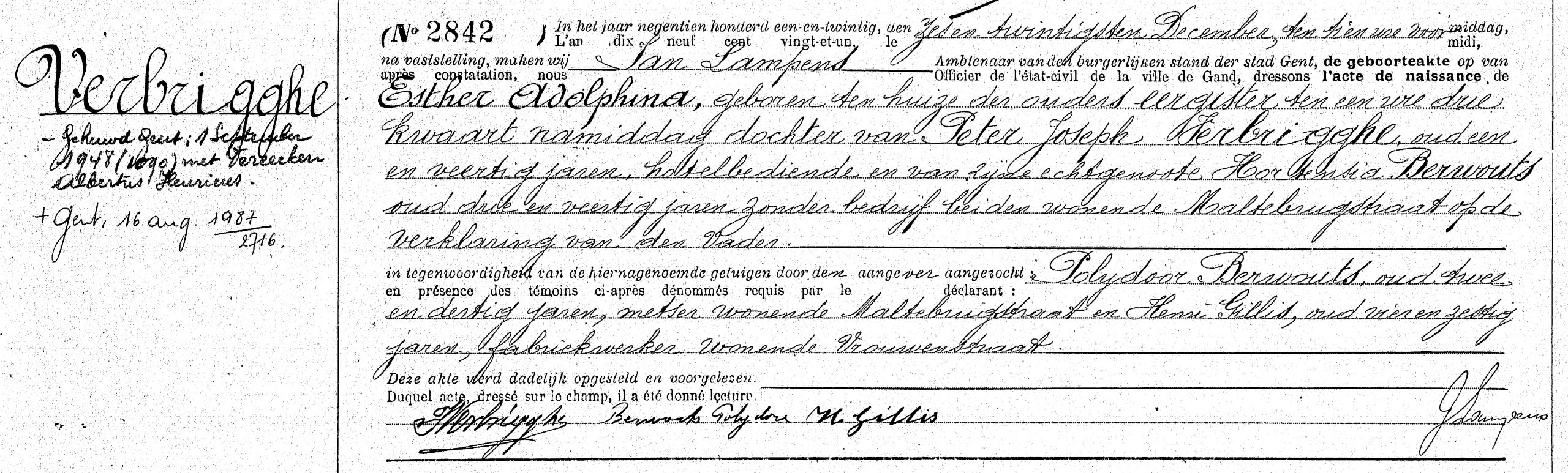
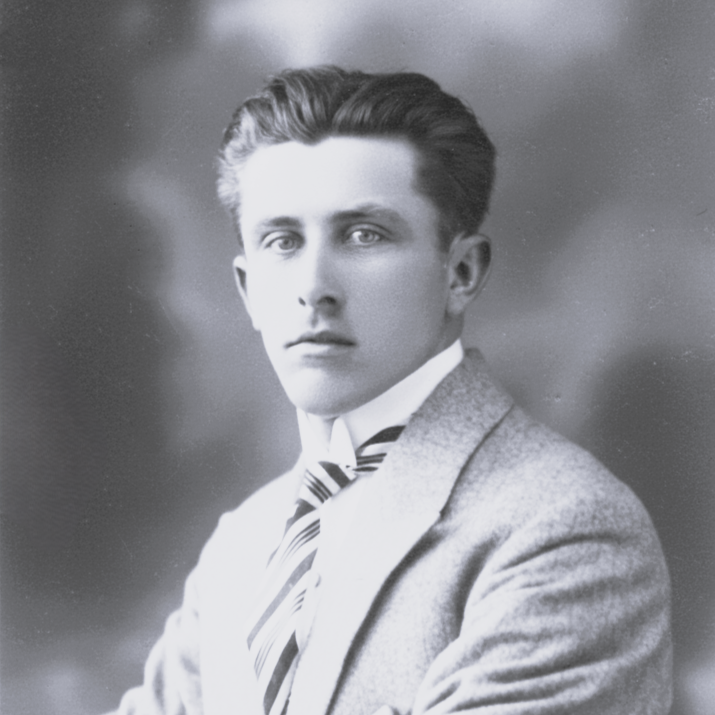
Joseph and Hortensia had seven children: Léon (1906), Marie (1907), Agnes (1908), Esther (1911), Firmin (1912), Stephanus Julianus Leo (1914) and Esther Adolphina (1921). Two daughters, Marie and the first Esther, died in their first year of life. The youngest daughter, Esther Adolphina, named after her late sister, became the only surviving daughter. In all, five children grew up in the Verbrigghe–Berwouts family. Of their four grandchildren, three are still alive today.
In the Verbrigghe family, almost everyone had an official name that nobody used. Stephanus Julianus Leo was called Etien at home. His uncle, officially Henderic Lodewyc, was known to everyone as Basile. And Joseph himself was registered as Pieter Joseph.
Working to live
Joseph initially worked in the kitchen of the Sint-Barbaracollege, a prestigious Jesuit institution in the heart of Ghent. It was steady work, but not a generous income for a large family.
In 1913 and 1914 he sought extra income on the coast, first in Ostend and then in Blankenberge. The Belle Époque had produced flourishing seaside resorts, and from hotels and restaurants Joseph sent postcards to Hortensia and their son Léon. They were brief greetings, but the pictures showed his temporary world: the sea, the promenade, the bustle of tourists.
After the First World War he worked as a hotel attendant at Hotel-Restaurant Rubens on the Rue Neuve Sainte-Pierre, now the Sint-Pietersnieuwstraat. This is evident from the birth certificate of his youngest daughter in 1921, where his occupation is recorded as “hotelbediende” (hotel attendant). Whether he continued to combine his kitchen work for the Jesuits with the hotel, or switched over completely, we do not know.
Joseph read French-language newspapers. As a result, his youngest daughter Esther picked up “living” French at home, almost effortlessly. People who knew him believed he came from a somewhat better background than his occupation suggested.
A collector with a hunger for the world
Joseph was a collector. Not out of luxury, but out of curiosity and a hunger for the world. He collected postcards, stamps and printed matter about the region. His world was small, his family large and his work hard, but through those cards he travelled further than he would ever go himself.
The First World War brought everything to an abrupt halt. International contacts fell away and his brother Basile served at the front. Four years without cards, four years in which Europe tore itself apart.
The world returns (1920–1922)
In 1920 communication resumed. Basile returned via Beverlo Camp and then left to join the Belgian occupation forces in Venn, near Mönchengladbach. His military postcards were the first new signs of contact. In that same year Joseph’s father David Alexander, the man the family called Leon, died in Daknam.
Joseph joined the R.E.C.P. network (Registre d’Échangistes de Cartes Postales), an international exchange register for postcard and stamp collectors, headquartered in Bry-sur-Marne, just outside Paris, with a branch office in Brussels. At its peak it had more than ten thousand members worldwide.
Between 1920 and 1922 Joseph was particularly active. He received an average of twelve cards a week, from all over Europe and far beyond. Correspondents wrote from major cities such as Paris and Rouen, but also from Luxembourg, Madeira, Morocco, Thessaloniki, Tokyo, Quebec and countless other places. The geographical spread was wide and ever-changing, depending on who was writing to him at the time. The messages were usually short and functional: “Cher collègue, voici une vue de notre ville. Envoyez-moi quelque chose de Belgique.” Only one correspondent wrote something that Joseph “must not forget”. What that was remains a mystery.
The end
The collection runs until 1924. Why it stopped after that, we do not know. A grandson said that the postcards were only a sideline to Joseph’s great passion for stamps.
Hortensia died in 1936, at the age of 54. In her later years she was paralysed on one side and suffered from rheumatism. Her daughter Esther Adolphina, still a teenager, helped care for her. Joseph followed his wife a year later, in 1937. He was 57. According to his daughter Esther, he died of missing her. Esther was sixteen then, and an orphan.
They left behind five children, a house full of memories and a suitcase full of postcards. More than a thousand glimpses of a world Joseph never travelled himself, but did try to hold on to.
Card by card…
→ Discover the collection: The Global Story
→ Read more about the R.E.C.P. network